Quick answer: There is no fixed number of surgical instruments. Estimates range from well over 10,000 distinct instruments in worldwide use to more than 100,000 variations in global production, and the number keeps growing. The reason there is no single count is that one instrument type spawns dozens of variations across sizes, specialties, and designs. What makes the vast number manageable is classification: by function (six core categories), by specialty, and by reusable versus disposable.
"How many surgical instruments are there?" is a natural question with a surprising answer: nobody knows exactly, and the honest experts say so. There is no official registry or global database listing every surgical instrument ever made. But the absence of a single number is not a dead end; it is the most interesting thing about the question, because understanding why the count is uncountable teaches you how the entire world of surgical instruments is structured.
The Range of Estimates
The figures people cite vary by an order of magnitude, and both ends are defensible depending on what you count. On the conservative side, medical experts agree there are well over 10,000 instruments in use worldwide, from simple scalpels to advanced robotic tools. On the expansive side, industry estimates put the number at over 100,000 distinct variations in global production.
The gap between 10,000 and 100,000 is not a contradiction; it is the difference between counting instrument types and counting instrument variations. And that distinction is the key to the whole subject.
Why There Is No Single Number
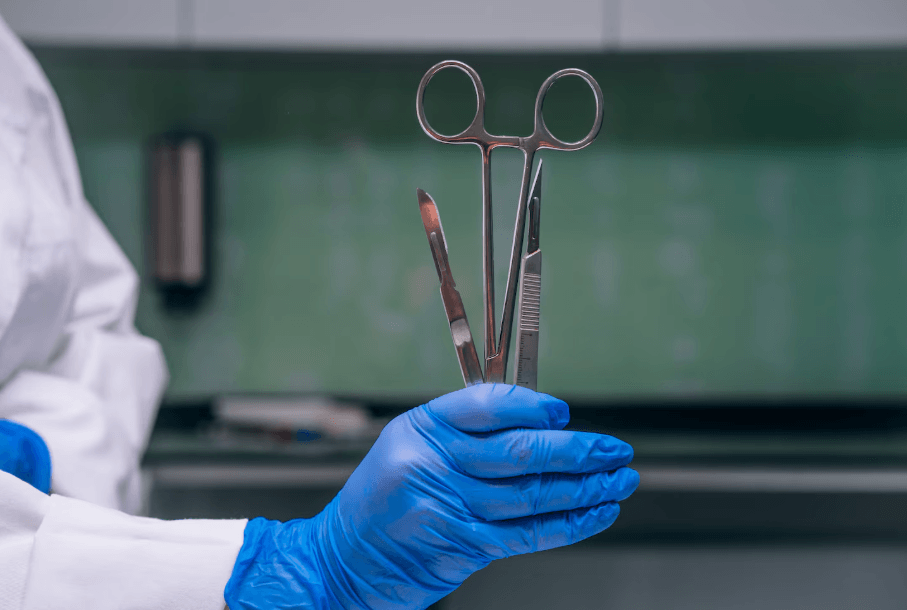
The count explodes because a single recognizable instrument is really a family of variants. Take the mosquito hemostat, one of the most common instruments in surgery. That single "type" can come in straight or curved jaws, multiple lengths, different finishes, and specialty designs, so it can easily spawn 50 or more versions, and that is just one instrument in one category.
Multiply that across several dimensions and the number balloons:
- Size and design variations of each base instrument.
- Use-case: open versus laparoscopic versus robotic versions of the same function.
- Specialty: each surgical field has its own sub-universe of instruments customized for its anatomy and challenges.
- Continuous innovation: new instruments are constantly developed, so the total is dynamic rather than fixed and keeps increasing.
So the precise answer to "how many" is "an uncountable and growing number, because the question conflates types with variations." The useful answer is the classification system that organizes them all.
Classification 1: By Function (the Core Six)
The most important way to organize surgical instruments is by what they do. Most instruments can be divided into a handful of major functional categories, each containing dozens or even hundreds of variations:
The six functional categories
- Cutting & dissecting: scalpels, scissors, osteotomes, chisels
- Clamping & occluding: hemostats and clamps that control bleeding
- Grasping & holding: forceps and tissue holders
- Retracting & exposing: retractors that hold tissue aside
- Suturing & closure: needle holders, sutures, staplers
- Suction & aspiration: suction tips that clear the field
This functional framework is the backbone of surgical instrument education, and it is why the standard teaching set is organized this way. The widely referenced "54 basic surgical instruments" are grouped into these major categories based on their primary function. If you know the six functions, you can place any instrument, regardless of how many thousands exist.
Classification 2: By Specialty
The true explosion in variety comes from surgical specialties, each of which has developed instruments tuned to its anatomy:
- Orthopedic surgery: bone cutters, rongeurs, heavy retractors, osteotomes.
- Neurosurgery: micro-dissectors, scalp hooks, dura scissors, fine instruments for delicate tissue.
- Ophthalmology: microsurgical instruments for the eye, like iris scissors and fine needle holders.
- ENT, cardiovascular, and others: each with its own specialized sub-set.
As one industry source puts it, each body system, brain, heart, spine, eyes, bones, skin, has hundreds of instruments designed for specific access, exposure, dissection, or closure, and each comes in multiple sizes and designs. Specialty is the dimension that turns thousands into tens of thousands.
Classification 3: Other Useful Distinctions
A few further classifications matter for understanding the full landscape:
- Reusable vs. disposable: reusable instruments are sterilized and used repeatedly; single-use disposables are used once. The same function may exist in both forms.
- Manual vs. powered/robotic: from a simple hand-held scalpel to powered drills and robotic surgical systems.
- By regulatory class: most hand-held surgical instruments are FDA Class I devices, the lowest-risk category, while powered and implant-related tools may carry higher classifications.
What This Means in Practice
The takeaway is not a number to memorize; it is a way to navigate. You will never learn all 10,000-plus instruments, and you do not need to. What you need is the framework: the six functional categories give you the core logic, specialty knowledge adds the instruments relevant to your field, and the reusable/disposable and manual/powered distinctions round out the picture. A surgeon, nurse, or buyer who internalizes this structure can encounter any unfamiliar instrument and quickly place it, by asking what function it serves, what specialty it belongs to, and whether it is reusable or single-use.
So how many surgical instruments are there? More than anyone can precisely count, somewhere between ten thousand recognized instruments and a hundred thousand-plus variations, and the number grows every year. But the categories are fixed and few, and that is what makes the vast inventory of surgery comprehensible rather than overwhelming.
Frequently Asked Questions
How many surgical instruments are there in total?
There is no exact number, because no official global registry exists. Estimates range from well over 10,000 distinct instruments in worldwide use to more than 100,000 variations in global production. The wide range reflects the difference between counting instrument types and counting all their size, design, and specialty variations, and the total keeps growing with ongoing innovation.
Why is there no exact count of surgical instruments?
Because a single instrument type spawns many variations. A common mosquito hemostat, for example, can exist in 50 or more versions across different jaw shapes, lengths, finishes, and specialty designs. Multiply that by surgical specialties, open versus laparoscopic versus robotic use cases, and continuous new development, and the count becomes dynamic and effectively uncountable rather than fixed.
What are the main categories of surgical instruments?
Functionally, most surgical instruments fall into six categories: cutting and dissecting, clamping and occluding, grasping and holding, retracting and exposing, suturing and closure, and suction and aspiration. This functional framework is the backbone of surgical instrument classification and the basis for standard teaching sets like the 54 basic surgical instruments.
How are surgical instruments classified besides by function?
Beyond function, instruments are classified by surgical specialty (orthopedics, neurosurgery, ophthalmology, ENT, cardiovascular, and more, each with customized tools), by reusable versus disposable, by manual versus powered or robotic, and by regulatory class, with most hand-held instruments falling into the lowest-risk FDA Class I category. Specialty is the dimension that most expands the total variety.
Do I need to learn every surgical instrument?
No. Learning the framework matters more than memorizing thousands of instruments. The six functional categories provide the core logic, specialty knowledge adds the instruments relevant to your field, and the reusable/disposable and manual/powered distinctions complete the picture. With this structure, you can place any unfamiliar instrument by identifying its function, specialty, and whether it is single-use.