A gonioscopy lens is one of the least expensive instruments in an eye-care practice and one of the few that imaging still cannot replace. It is also the one most often bought by brand name out of habit, when the decision really comes down to two things: whether the lens views the angle directly or through mirrors, and how those mirrors are arranged. Get those right and a five-minute exam catches a narrow angle before it blinds someone. Get them wrong and you have bought a lens that slows the exam or sits unused.
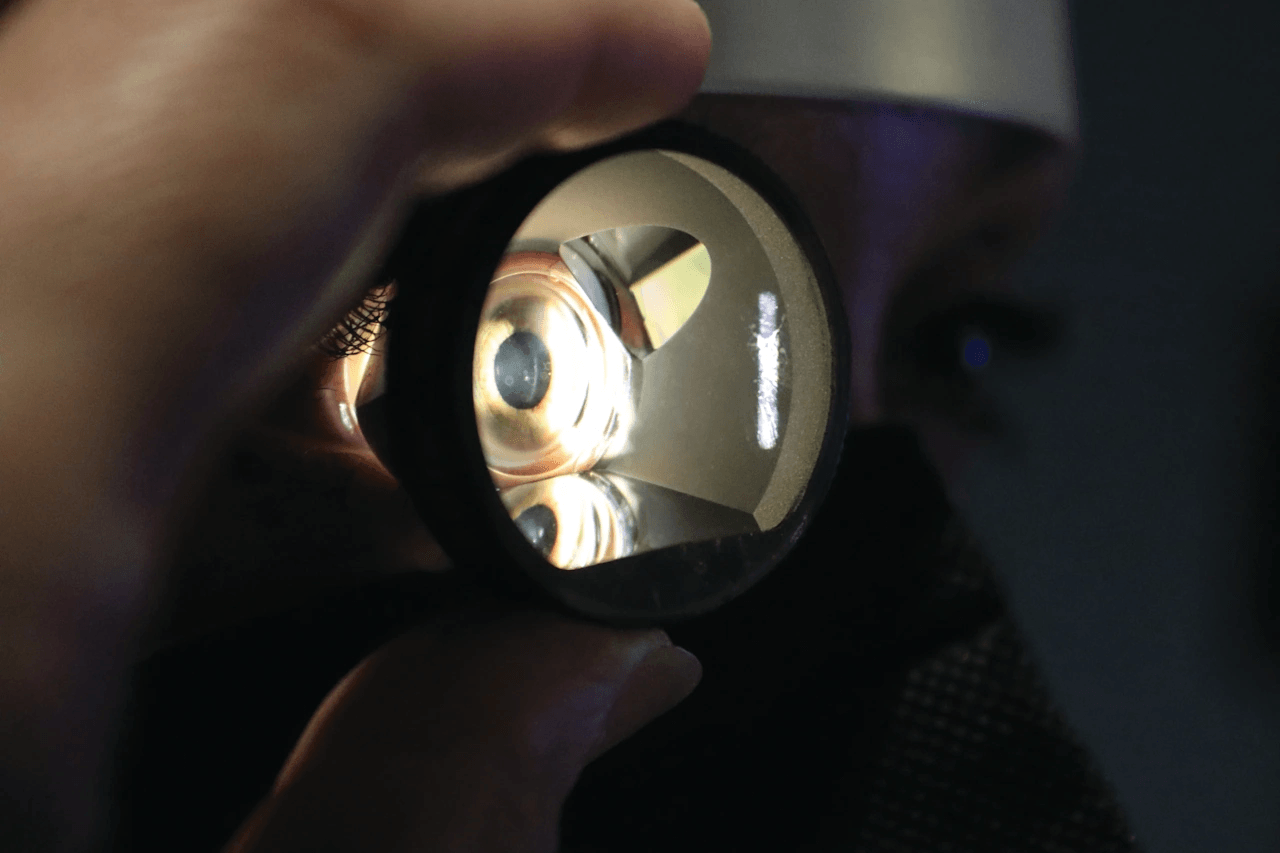
A gonioscopy lens, or goniolens, is a contact lens that lets a clinician see the anterior chamber angle, the drainage corner where the iris meets the cornea. That angle cannot be viewed directly because light from it is totally internally reflected at the cornea, so the lens defeats that reflection and brings the angle into view. This guide is vendor-neutral. It covers why gonioscopy still matters, the direct-versus-indirect fork, mirror configurations, diagnostic versus laser lenses, care and sterilization, and how to match a lens to the practice and source it.
Why gonioscopy still matters, and why imaging has not replaced it
The reason to care about the lens is the stakes of the exam. Glaucoma is one of the leading causes of irreversible blindness in the United States, more than three million Americans have it, and because it usually has no early symptoms only about half of those people know they have it, according to the CDC's overview of glaucoma in the United States. Examining the drainage angle is central to sorting open-angle from angle-closure disease, and the two are managed differently.
Gonioscopy remains the reference standard for that angle assessment. The StatPearls review of acute angle-closure glaucoma describes gonioscopic examination as crucial for verifying angle closure and making a definitive diagnosis, a point detailed in the StatPearls review of acute angle-closure glaucoma. Newer anterior-segment imaging adds information, but it has not displaced the lens for the basic question of whether the angle is open or closed. That is why a goniolens belongs in any practice that screens for or manages glaucoma, and why the buying decision is worth getting right even though the device is cheap.
Direct versus indirect goniolenses: the first fork
Every goniolens is either direct or indirect, and that choice shapes everything else.
Direct goniolenses let the clinician look straight into the angle without mirrors. The American Academy of Ophthalmology's review of gonioscopy notes that direct lenses, such as the Koeppe type, are used with the patient lying down and are favored for examining infants and children and for a panoramic, non-inverted view, as described in the AAO's principles of gonioscopy. Direct gonioscopy is mostly an operating-room and pediatric tool. It needs the patient supine and a separate light source, so it is not what a clinic reaches for during a routine slit-lamp visit.
Indirect goniolenses use one or more mirrors to bounce the angle's image back to the viewer at the slit lamp, with the patient seated. The AAO review notes that indirect lenses are the lenses most ophthalmologists use, because they are quick and convenient as part of a routine glaucoma evaluation. The tradeoff is that the image is reversed: you are looking at the mirror reflection of the angle opposite the mirror. For nearly every clinic, an indirect lens is the right default, and the rest of this guide focuses there.
Indirect lens designs and mirror count
Indirect goniolenses differ mainly in how many mirrors they carry and whether they need a coupling fluid, which together decide how fast and how completely you can scan the angle.
Goldmann-type lenses use one or more mirrors set at an angle and require a viscous coupling fluid between the lens and the cornea. A single-mirror Goldmann lens shows one segment of the angle at a time and is rotated to view the rest; three-mirror versions add mirrors for the angle, peripheral retina, and mid-periphery. These lenses give a stable, high-quality view and are a long-standing choice, but the coupling gel can blur the view for any retinal exam that follows and takes a moment to rinse.
Four-mirror lenses (the Zeiss, Posner, and Sussman designs) carry four mirrors set so the whole angle can be seen with little or no rotation of the lens. The AAO review notes these four-mirror lenses allow viewing of the entire angle with minimal rotation, which speeds the exam. Their small flat contact surface fits the cornea without a viscous gel, so the cornea stays clear for the rest of the slit-lamp exam. The Posner has a handle, the Sussman is held directly, and the Zeiss mounts on a forked holder; the optics are similar.
Indentation, or compression, gonioscopy is a technique more than a separate lens, but it drives lens choice. Pressing gently with a small-footprint four-mirror lens pushes aqueous into the angle and shows whether a closed angle is simply apposed and reversible or permanently scarred. That distinction changes management, so a practice that evaluates narrow angles usually wants a four-mirror lens capable of indentation, not only a Goldmann lens.
Diagnostic versus laser goniolenses
The next question is whether the lens only needs to see the angle or also has to deliver treatment.
Diagnostic goniolenses are for viewing only. A four-mirror diagnostic lens covers routine screening and narrow-angle assessment, and a Goldmann three-mirror covers the angle plus the peripheral retina. For a general optometry or ophthalmology clinic that screens for glaucoma and refers surgical cases out, a diagnostic lens is all that is required.
Laser and surgical goniolenses add anti-reflective coatings and optics tuned to aim a laser into the angle. These are used for laser trabeculoplasty and, increasingly, for minimally invasive glaucoma surgery performed through the angle, where the surgeon needs a clear intraoperative view of the trabecular meshwork. A practice that performs angle-based laser or surgery needs a treatment-rated lens, often a specific surgical gonioprism, and should match the lens to the laser and the procedure rather than assume a diagnostic lens will serve. For the wider surgical context, our phacoemulsification machine buying guide covers the cataract platform these procedures often sit alongside.
Coupling fluid, coatings, and sterilization
The unglamorous details decide whether a lens is pleasant to use and how long it lasts.
Coupling fluid. Goldmann-style lenses need a viscous gel between lens and cornea; four-mirror lenses generally do not, because their small contact surface couples with the eye's own tear film. If you plan to examine the retina in the same sitting, the gel-free four-mirror lens keeps the cornea clear, which is a practical reason many clinics keep one on the slit lamp.
Coatings and optics. Anti-reflective coatings matter most on laser lenses, where stray reflection degrades aiming and can be unsafe. For diagnostic lenses, optical quality and a scratch-resistant surface are the things to weigh, since a scratched contact surface ruins the view and the lens is then effectively disposable.
Cleaning and sterilization. A goniolens is a reusable, patient-contact device, so it must be disinfected between patients per the manufacturer's instructions, and the cleaning method affects lens life. Confirm whether a given lens is autoclavable or must be chemically disinfected, because using the wrong method can cloud the optics or loosen the cement that holds the mirrors. Disposable single-use goniolenses also exist and remove the reprocessing burden at a higher per-exam cost, which can suit screening drives or infection-control-sensitive settings. The same instrument-care discipline applies across the eye lane; our slit lamp buying guide covers the platform the lens is used on.
Matching the lens to the practice and sourcing it
With the options clear, the choice usually resolves quickly by practice type.
General optometry or screening clinic. A single four-mirror diagnostic lens, capable of indentation, handles routine glaucoma screening and narrow-angle assessment, and keeps the cornea clear for the rest of the exam. Many clinics add a Goldmann three-mirror for combined angle and peripheral-retina viewing.
Glaucoma or surgical practice. Expect to stock both a diagnostic four-mirror lens and one or more treatment-rated lenses matched to the lasers and procedures performed, plus spares, because a scratched lens takes a station out of service.
Buying new versus used. Goniolenses are precision optics with no electronics, so a sound used lens can be a reasonable buy, but the optics are the whole product. Inspect any pre-owned lens for scratches, internal haze, chips, and loose or fogged mirrors, and confirm the contact surface is clean and undamaged, since any of those defects degrades the view and cannot be polished out in the field. Verify the lens is a genuine, undamaged unit and that its sterilization compatibility is documented. The diligence is the same you would apply to any used clinical equipment; our checklist for vetting a refurbished equipment supplier and our overview of new versus refurbished medical equipmentlay out the questions. For adjacent anterior-segment instruments, see our pachymeter buying guide and specular microscope buying guide.
A short pre-purchase checklist
Before you buy a gonioscopy lens, confirm the following: you have chosen indirect for routine seated slit-lamp use, reserving direct lenses for pediatric or operating-room needs; the mirror configuration fits your workflow, with a four-mirror lens for fast, gel-free, whole-angle viewing and indentation, and a Goldmann lens where a stable single-segment or combined retinal view is wanted; the lens is diagnostic-only or treatment-rated to match whether you perform angle laser or surgery, and a laser lens carries the right coatings; the sterilization method the lens requires fits your reprocessing setup; and, for a used lens, the optics, mirrors, and contact surface are flawless. The cheapest lens that slows the exam or clouds after one cleaning cycle is not the economical choice.
Frequently asked questions
What is the difference between a direct and an indirect goniolens?
A direct goniolens lets the clinician look straight into the drainage angle without mirrors, typically with the patient lying down, and is favored for examining infants and in the operating room. An indirect goniolens uses one or more mirrors to reflect the angle's image to a viewer at the slit lamp with the patient seated, which makes it quick to use in routine glaucoma evaluation. The image from an indirect lens is reversed, showing the mirror's reflection of the opposite angle. Most clinics use indirect lenses.
What is the difference between a Goldmann and a four-mirror gonioscopy lens?
A Goldmann-type lens uses one or more angled mirrors and needs a viscous coupling fluid between the lens and the cornea; it gives a stable view but is rotated to scan the angle and the gel can blur a following retinal exam. A four-mirror lens, such as the Zeiss, Posner, or Sussman, carries four mirrors so the whole angle can be seen with little rotation and generally needs no coupling gel, which keeps the cornea clear. Four-mirror lenses also allow indentation gonioscopy.
What is indentation gonioscopy and which lens does it need?
Indentation, or compression, gonioscopy is a technique in which gentle pressure with a small-footprint four-mirror lens pushes aqueous into the angle to reveal whether a closed angle is merely apposed and reversible or permanently scarred. That distinction changes how the glaucoma is managed. It requires a four-mirror lens with a small flat contact surface rather than a Goldmann lens, which is why practices that assess narrow angles usually keep a four-mirror lens.
Do I need a separate goniolens for laser treatment?
Usually yes. Diagnostic goniolenses are made for viewing only, while laser and surgical goniolenses add anti-reflective coatings and optics tuned to aim a laser into the angle for procedures such as laser trabeculoplasty and angle-based minimally invasive glaucoma surgery. A practice that performs angle laser or surgery should use a treatment-rated lens matched to its laser and procedure, rather than relying on a diagnostic lens.
How do you clean and sterilize a gonioscopy lens?
A goniolens is a reusable, patient-contact device and must be disinfected between patients following the manufacturer's instructions. Lenses differ in whether they tolerate autoclaving or require chemical disinfection, and using the wrong method can cloud the optics or loosen the mirror cement, so confirm the approved method before buying. Single-use disposable goniolenses are also available and remove reprocessing at a higher per-exam cost, which can suit screening events or infection-control-sensitive settings.