A fetal Doppler does one job: it makes the fetal heartbeat audible. The same two words, though, cover two very different products. One is a consumer gadget sold for a few dollars to expectant parents who want to listen at home. The other is a clinical instrument a midwife, obstetrician, or family physician relies on at every prenatal visit. They look similar. They are not the same purchase, and a clinic that buys the wrong one finds out quickly.
This guide is for the clinical buyer: practice managers, OB/GYN and family-medicine clinics, midwifery practices, and EMS or international facilities sourcing portable diagnostics. It explains what a fetal Doppler measures, where the clinical and over-the-counter versions diverge, why the FDA treats these as prescription devices, how to read probe frequency, and which specifications actually change day-to-day use. The goal is a confident buying decision, whether or not you buy from us.
What a Fetal Doppler Does, and What It Does Not
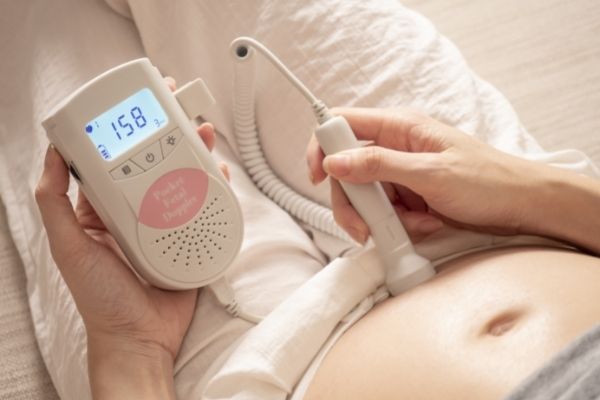
A fetal Doppler is a handheld ultrasound transducer that detects motion of the fetal heart and converts it into an audible signal. It uses the Doppler effect: a crystal sends an ultrasonic wave into the body, the moving heart reflects that wave at a shifted frequency, and the device turns the shift into the sound you hear. Clinicians call this technique Doppler auscultation. According to a review of fetal heart rate monitoring published in the Journal of Prenatal Medicine and hosted by the National Library of Medicine, handheld Doppler is the standard tool for intermittent auscultation at routine prenatal visits and during low-risk labor.
What a fetal Doppler does not do is produce an image. It is not an ultrasound scanner. It cannot assess anatomy, position, fluid, or placental location. It reports one thing: that a heartbeat is present and roughly how fast it is. That single data point is useful for confirming fetal heart activity and counting rate, but it is not a substitute for a diagnostic ultrasound, and a normal Doppler reading does not rule out a problem. The same review notes that a known pitfall is mistaking the maternal heart rate for the fetal one, especially in later labor, which is one reason these devices are meant to be used by trained operators.
Clinical-Grade vs Over-the-Counter: The Real Differences
Consumer fetal Dopplers and clinical units share the same basic physics, but they are built to different standards. The consumer version is optimized for low cost and reassurance. The clinical version is optimized for reliable detection, accurate rate display, durability across thousands of exams, and infection control. The table below maps where they part ways.
| Attribute | Over-the-counter monitor | Clinical-grade handheld Doppler |
|---|---|---|
| Primary purpose | Let parents hear a heartbeat | Confirm fetal heart activity and count rate clinically |
| Rate display | Often none, or an unvalidated number | Calibrated digital heart-rate (FHR) readout |
| Probe options | Fixed, single low-cost probe | Interchangeable 2 MHz and 3 MHz obstetric probes, sometimes vascular probes |
| Build and cleaning | Light plastic, limited disinfection | Clinical housing, wipe-down or waterproof probe for disinfection |
| Power | Disposable batteries | Rechargeable options, battery indicators, long runtime |
| Regulatory status | Marketed to consumers, often offshore | Prescription device for professional use |
The practical takeaway: if a clinician will rely on the reading to make a decision, the rate display and probe quality matter more than anything else. A consumer unit that says "heartbeat detected" without a validated rate is not a clinical tool. A clinic should treat probe options and display accuracy as the core of the purchase.
Why the FDA Treats Fetal Dopplers as Prescription Devices
This is the point most consumer coverage skips, and it matters for buyers. In the United States, fetal heartbeat monitors are regulated as prescription devices, not over-the-counter products. The U.S. Food and Drug Administration's guidance on ultrasound imaging states that fetal ultrasonic heartbeat monitors, sometimes called doptones, should be used only by trained health care providers when medically necessary, and warns that use by untrained persons could expose the fetus to prolonged and unsafe energy levels or produce information that is interpreted incorrectly.
The FDA's reasoning is that ultrasound deposits energy in tissue. The same guidance explains that ultrasound can slightly heat tissue and can produce cavitation, the formation of very small gas bubbles, and that because the long-term effects are not fully known, scans should be done only when there is a medical need and by appropriately trained operators. That is why a clinical fetal Doppler belongs in trained hands and why selling one is governed by professional-use rules. For a clinic, the implication is straightforward: source from a supplier that handles these as the prescription devices they are, and keep usage within trained staff.
Probe Frequency: 2 MHz vs 3 MHz, and Vascular Probes
Probe frequency is the single most important spec on a clinical fetal Doppler, and it is the one buyers most often get wrong. Obstetric probes commonly come in two frequencies, and they are not interchangeable in purpose.
A 2 MHz probe penetrates more deeply. Lower frequency travels farther into tissue, which makes 2 MHz the better choice for later pregnancy, for labor and delivery, and for patients with a higher body mass index where the heart sits deeper. A 3 MHz probe is more sensitive at shallower depths, which makes it better for early pregnancy detection. Clinical handheld units using a suitable probe can typically pick up the fetal heartbeat from roughly 10 to 12 weeks of gestation, consistent with the routine prenatal auscultation timing described in the National Library of Medicine review of fetal heart rate monitoring. The trade-off is depth versus early sensitivity, so a practice that sees patients across all trimesters benefits from a system that accepts both probes.
This is where interchangeable-probe systems earn their cost. Devices that accept interchangeable plug-and-play obstetric and vascular probes let one base unit cover early prenatal visits with a 3 MHz probe, labor with a 2 MHz probe, and, with an 8 MHz vascular probe, peripheral blood-flow checks. For a clinic that does more than obstetrics, that flexibility can replace two or three single-purpose devices.
Specifications That Matter When You Buy
Beyond probe frequency, a short list of features separates a unit you will be happy with from one you will replace. Use these as your comparison checklist.
Display and rate readout
A calibrated digital fetal heart rate display is the feature that makes a Doppler clinical rather than recreational. Look for a clear numeric FHR readout, ideally with an OLED or LCD screen that is legible in a bright exam room. Audio-only units force the clinician to count manually, which is slower and less consistent.
Audio quality and output
Signal clarity determines how fast a clinician finds and holds the heartbeat. Good units have a sensitive transducer, clean amplification, and a speaker plus a headphone jack so the sound can be shared or kept private. Weak audio is the most common complaint with bargain units.
Power and runtime
Rechargeable batteries with a charge indicator reduce running cost and avoid dead-battery surprises mid-clinic. If you prefer disposable cells for simplicity, confirm runtime and keep spares. Either way, a battery-level indicator is worth having.
Cleaning and waterproofing
Probes contact patients and gel all day, so they need to tolerate disinfection. A waterproof probe is easier to clean and is required for water-birth settings. Confirm the manufacturer's approved cleaning method before standardizing on a device.
Form factor
Pocket dopplers suit exam rooms and home visits. Tabletop or cart units suit labor and delivery where a fixed display and continuous use matter. Match the form factor to where the device will actually be used.
New vs Refurbished, and What to Verify
Clinical fetal Dopplers hold up well, which makes professionally refurbished units a reasonable way to lower cost without giving up clinical quality. The decision is less about new versus used and more about who refurbished the device and what they verify. Before buying refurbished, confirm the probe has been tested for sensitivity and output, the rate display reads accurately against a known signal, the battery holds a full charge, and the unit ships with a warranty and clear return terms. Our broader checklist for vetting reconditioned gear is in the guide to vetting a refurbished medical equipment supplier, and the general trade-offs are covered in new vs refurbished medical equipment.
On price, expect a wide range. Consumer home monitors sell for tens of dollars and are not built for clinical use. Clinical pocket dopplers with a digital display commonly run from a few hundred dollars new, while interchangeable-probe and cart systems cost more because you are buying multiple probes and a more capable base. Refurbished clinical units typically land below new pricing for the same model. Compare on total cost including probes, not just the base unit, since a second probe is often where the real spend sits.
A fetal Doppler is a small purchase next to most diagnostic equipment, but it is one a clinic touches constantly, so the right choice pays off in reliability. If you are outfitting a women's health practice more broadly, the OB/GYN equipment essentials list puts the Doppler in context with the rest of the room, and for other portable diagnostics the bladder scanner buying guide follows the same logic of specs first, brand second.
Frequently Asked Questions
When can a fetal Doppler detect a heartbeat?
A clinical handheld Doppler with a suitable probe can usually detect the fetal heartbeat from about 10 to 12 weeks of gestation, which matches the timing of routine prenatal auscultation in the clinical literature. Detection earlier than that is inconsistent and depends on probe frequency, patient anatomy, and operator skill. A 3 MHz probe helps for earlier detection.
Is a fetal Doppler the same as an ultrasound scan?
No. A fetal Doppler uses ultrasound to make the heartbeat audible and to report rate, but it produces no image. It cannot assess anatomy, fetal position, fluid, or the placenta. A diagnostic ultrasound scanner is a separate, imaging device. A normal Doppler reading does not rule out a problem that imaging would catch.
Can you use a fetal Doppler at home?
The FDA regulates fetal heartbeat monitors as prescription devices and advises that they be used only by trained health care providers when medically necessary, because untrained use can expose the fetus to unnecessary ultrasound energy or produce readings that are interpreted incorrectly. Home consumer units are sold widely, but the clinical and regulatory position is that these devices belong in trained hands.
What is a normal fetal heart rate?
A normal fetal heart rate generally falls between 110 and 160 beats per minute, though it varies with gestational age and fetal activity. A clinical Doppler with a calibrated rate display makes this easy to read; that is a key reason to choose a unit with a validated digital readout rather than an audio-only consumer device. Always interpret a single reading in clinical context.
How much does a clinical fetal Doppler cost?
Clinical pocket dopplers with a digital display commonly start in the low hundreds of dollars new, and interchangeable-probe or cart systems cost more because they include multiple probes and a more capable base unit. Refurbished clinical units generally cost less than new for the same model. Compare total cost including the probes you need, since a second obstetric or vascular probe is often a meaningful part of the price.
This article is general buying guidance, not medical advice. Fetal Dopplers are prescription devices intended for use by trained clinicians; follow the manufacturer's instructions and your facility's protocols.